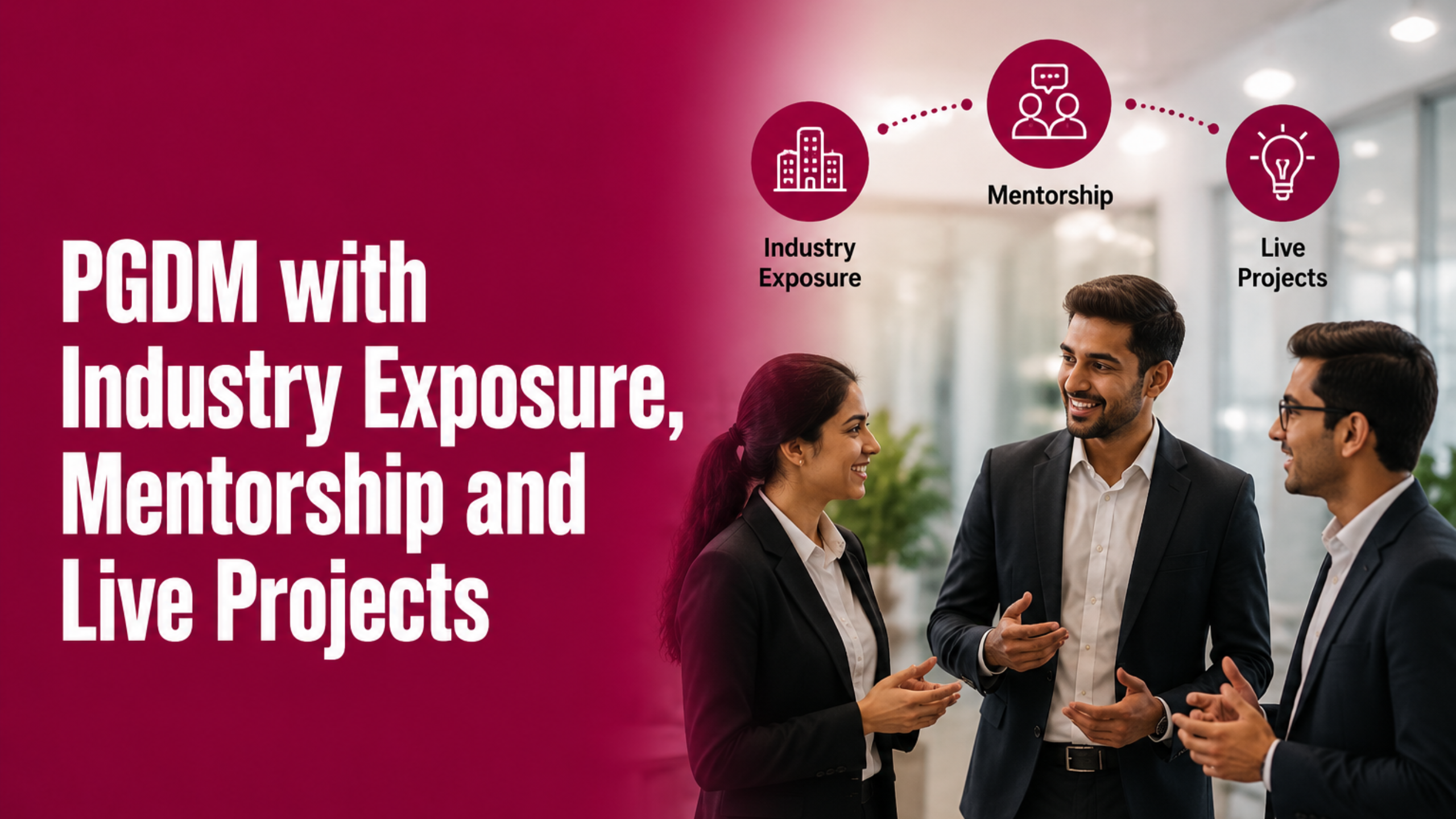
PGDM with Industry Exposure, Mentorship and Live Projects
There is a version of management education that most people are familiar with which is the one where you sit in a classroom for two years, study cases about companies you have never worked for, write exams on frameworks you have not had the chance to apply anywhere and then graduate and spend the first year of your career figuring out how any of it connects to actual work. This version produces a degree. It does not always produce a person who is ready to do the job.
The reason this gap exists is not that the content is wrong or that the faculty are not knowledgeable. It is that knowing about something and being able to do something are different in ways that classroom instruction alone cannot fully bridge. The bridge is built through actual exposure to how work happens inside real organisations, through working alongside people who have been doing this for years and who can tell you where the theory connects to reality and where it does not and through taking on real problems with real stakes rather than always working from case studies that already have an answer at the back.
This is what PGDM with industry exposure is supposed to provide and what the better programmes in Delhi actually do provide in ways that make a measurable difference to what graduates can do when they leave.
What Industry Exposure Means in Practice
Industry exposure in a PGDM programme can mean quite different things depending on the institution. At the less substantive end it means a few guest lectures from industry professionals each semester which are interesting and not particularly transformative. At the more substantive end it means ongoing relationships with organisations that bring real problems into the classroom, internships where the student is doing actual work that the organisation cares about and structured engagement with industry that happens throughout the programme rather than being concentrated in one or two events.
The difference is visible in how prepared graduates are when they enter the job market. A student who has spent two years in an environment where industry is a real presence in what they learn thinks and talks about business differently from one who has studied industry from a distance. Recruiters who hire from both kinds of programmes notice this difference fairly quickly even if they cannot always articulate exactly what they are noticing.
PGDM Mentorship Programmes and What They Give You
A PGDM mentorship programme in Delhi that is genuinely working connects students with professionals who have real experience and are willing to engage with more than just the occasional email. The kind of mentorship that actually changes how someone thinks about their career is not a formal once-a-semester check-in. It is an ongoing relationship where someone who has navigated the professional world can tell you what they see when they look at your situation from the outside.
This kind of relationship helps students figure out what they actually want to do rather than just what options are available. It helps them understand what a particular career path really looks like day to day rather than how it is described in a job posting. And it gives them a connection to the professional world that goes beyond the placement process which is genuinely valuable when you are early in your career and still figuring a lot of things out.
What Live Projects Actually Teach
PGDM live projects in Delhi are one of those features that programmes mention quite often and that vary enormously in what they actually involve. A live project that is genuinely live means working on a real problem for a real organisation where the output is going to be used for something rather than just evaluated and filed. The organisation has a stake in what you produce. That changes how you approach the work in ways that case studies and simulations do not quite replicate.
Working under those conditions teaches things that the classroom does not teach well. Managing your time when there is no assignment deadline but there is a client expectation. Communicating with people who are not your professors and who have different ways of working and different priorities. Dealing with incomplete information and still having to produce something useful. These are the actual conditions of professional work and getting experience with them during the programme rather than after it makes a real difference.
IMM in Delhi builds industry exposure and mentorship and live project work into the PGDM in ways that are integrated with the curriculum rather than added on at the edges.
FAQs
1. What does genuine industry exposure in a PGDM programme look like?
Ans. Ongoing relationships with real organisations that bring actual problems into the learning environment, internships where students do substantive work and structured industry engagement throughout the programme rather than only guest lectures or one-off events.
2. How does a PGDM mentorship programme in Delhi actually help students?
Ans. By connecting them with professionals who can give honest perspective on career directions, help them understand what specific roles actually look like day to day and provide a connection to the professional world that goes beyond the formal placement process.
3. What makes a live project genuinely useful compared to a case study?
Ans. The real stakes. Working on a problem that an organisation is actually going to use the output of changes how you approach the work and teaches professional habits like managing client expectations and working with incomplete information that classroom work does not replicate well.
4. When should students ask about industry exposure during a college visit?
Ans. Ask specifically what ongoing relationships the college has with industry, what live projects looked like in the previous year and what the internship placement process involves. The specificity of the answers tells you how real the engagement actually is.
5 .Does industry exposure during a PGDM programme affect placement outcomes?
Ans. Yes directly. Students who have had real industry engagement during the programme think and talk about business differently and recruiters notice this. The quality of the internship in the first year is often a leading indicator of final placement quality.